


Cross-Regional Radio Network Deployment
RoIP gateways were deployed at remote radio sites to carry selected channels over managed IP networks and provide centralized dispatch access without replacing the existing field radio environment.
View Case
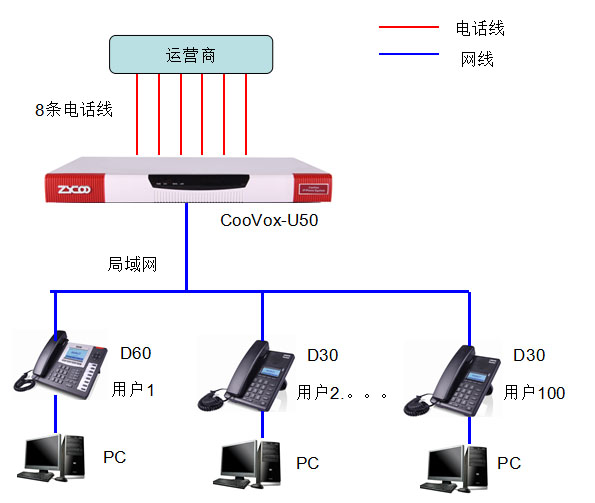
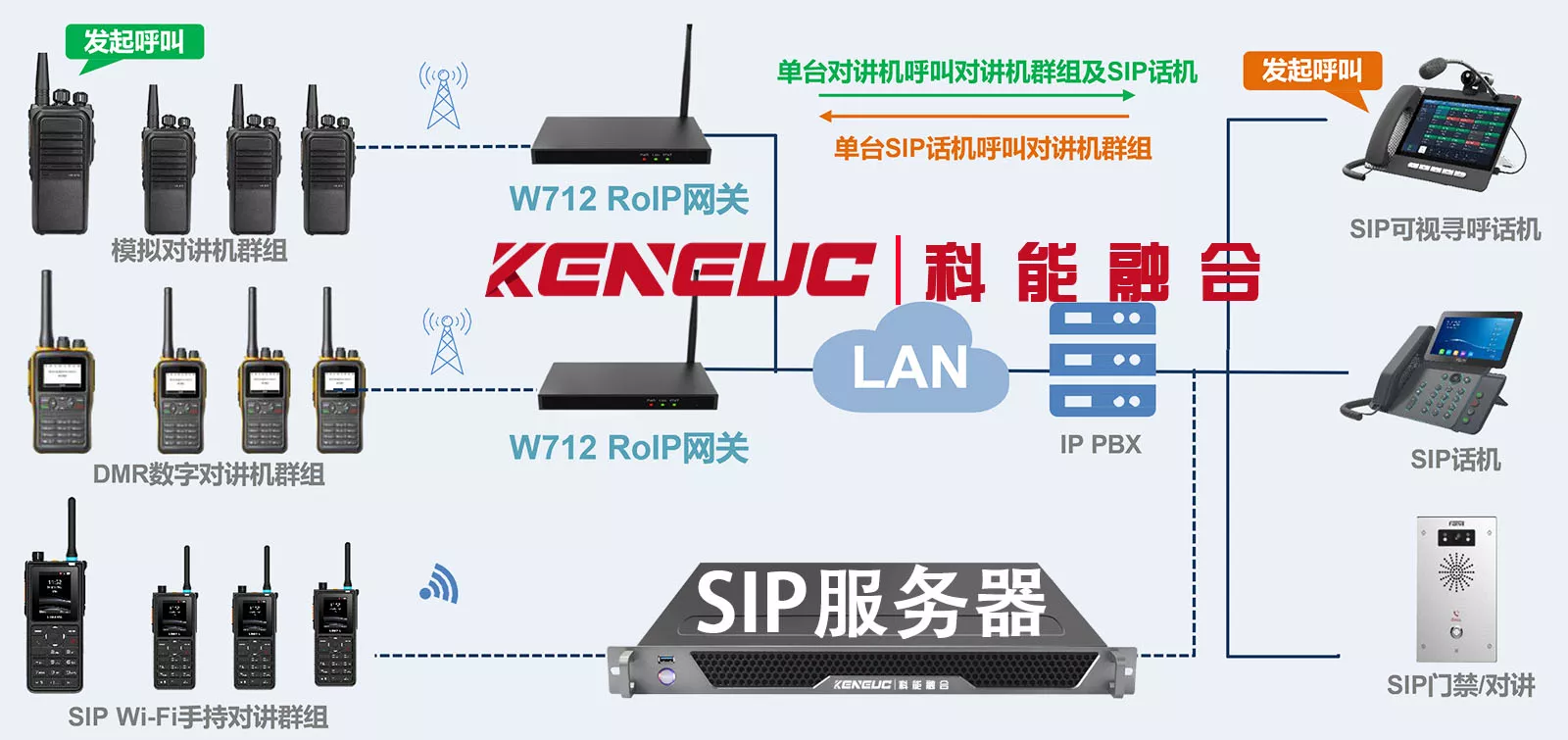
Becke RoIP systems place an IP gateway between the radio and the dispatch network. Audio, PTT and available control signals can then be carried across LAN, WAN, VPN, fiber or cellular links while compatible field radios remain in service.
Build radio communications that are easier to scale, integrate, protect and manage as operational requirements change.
SCALABLE BY DESIGN
Add radio sites, channels and dispatch positions as requirements expand without redesigning the entire communication architecture.
See the system architectureINVESTMENT PROTECTION
Extend compatible radios and base stations with IP connectivity so existing field equipment and operating practices can remain in service while dispatch access expands.
See the migration approachSERVICE CONTINUITY
Plan managed network paths, backup dispatch access and system supervision so radio operations can continue when individual links or locations are unavailable.
See supervision and resilienceEASIER OPERATIONS
Centralize configuration, permissions, monitoring, recordings and service status to reduce the effort required to operate distributed radio systems over time.
Explore management essentialsBecke RoIP systems are built for operations where fast, controlled and dependable communication matters. Radio, SIP, paging, alarms, video and dispatch resources work together to support coordinated response when every call and every second counts.
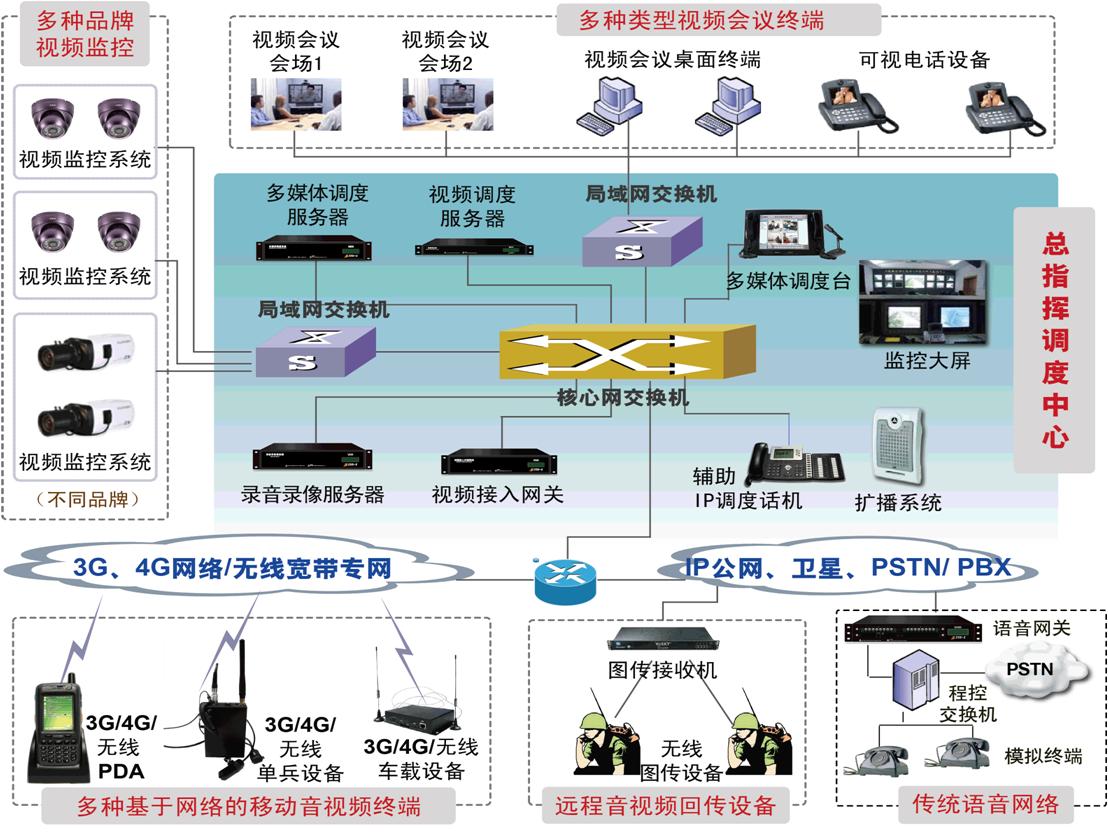
Bring radio users, SIP phones and dispatch operators into one coordinated voice workflow for joint operations across teams.
Create controlled multi-party communication between selected radio channels, telephone users and dispatch positions so field teams, control rooms and command staff can coordinate across different communication networks.
Deliver live or prerecorded emergency instructions to selected radio groups, SIP paging endpoints and connected PA zones.
Issue emergency instructions and zone-based notifications from the dispatch environment so the right personnel receive clear, consistent information through approved communication channels.
Give authorized users controlled communication paths between selected radio, SIP and telephony resources during joint operations.
Apply approved communication paths between radio channels, SIP users and dispatch resources so cross-network access can be established when required without opening every system to every user.



Use alarms and system events to trigger predefined communication, notification and dispatch actions.
Connected alarms can initiate configured actions such as operator notification, priority calling, paging or dispatch workflows, reducing the delay between event detection and operational response.
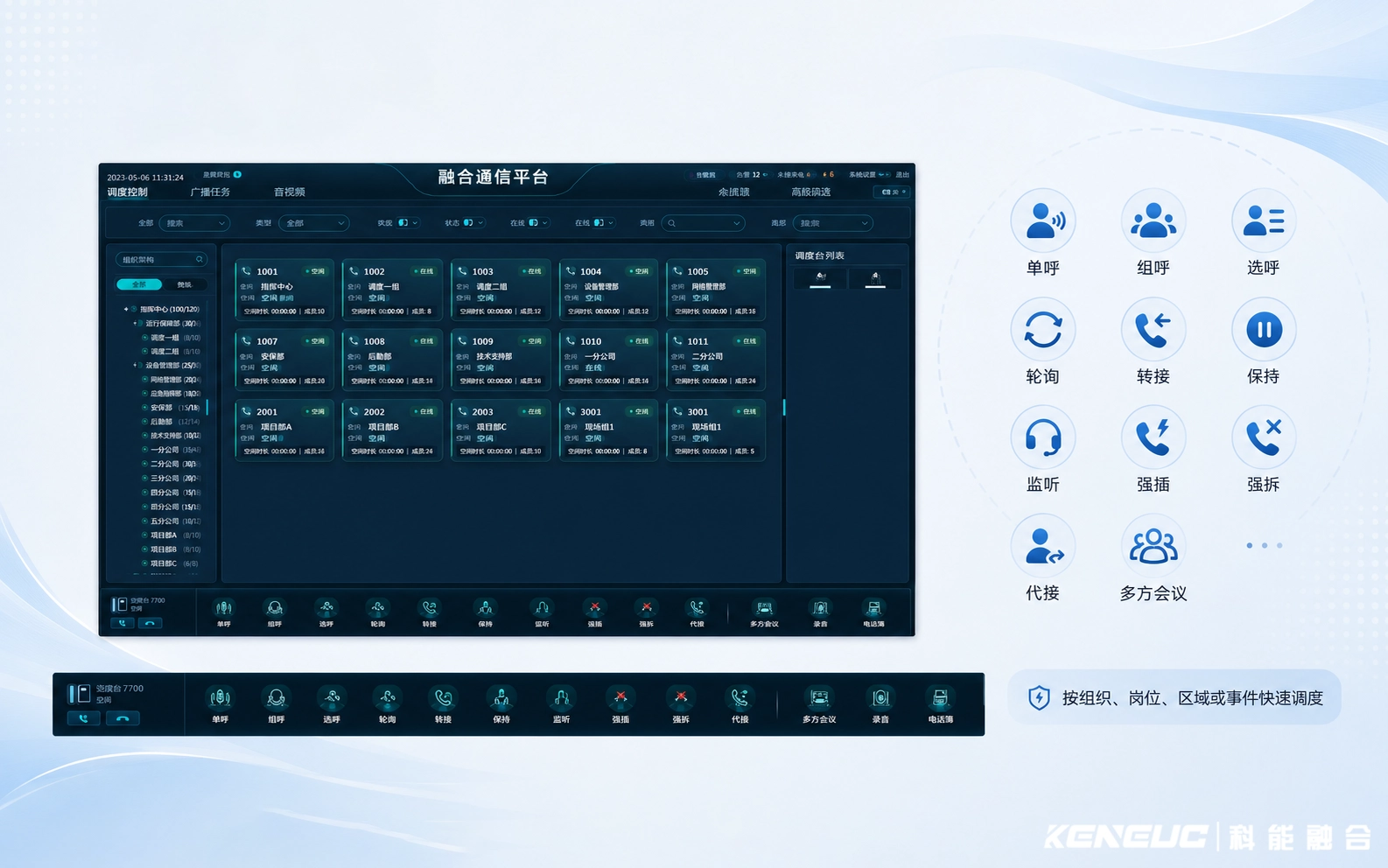
Give authorized dispatchers priority access to approved radio resources for command, monitoring and coordinated response.
Use PTT, group calls, channel monitoring, priority handling and approved cross-network patches from centralized or distributed dispatch positions to maintain clear command paths during critical operations.
Link calls, alarms and dispatch events with compatible video resources to give operators clearer situational context.
Associate incoming calls, alarms and dispatch events with relevant cameras or locations so operators can verify site conditions before making dispatch decisions.
Technical articles covering radio interfaces, gateway selection, managed IP transport, dispatch workflows, interoperability and acceptance testing.
Understand where the gateway sits, how audio and PTT are transported, and what must be checked before connecting a control radio to remote dispatch.
Check radio audio paths, PTT control and COR/COS signaling before selecting the gateway interface.
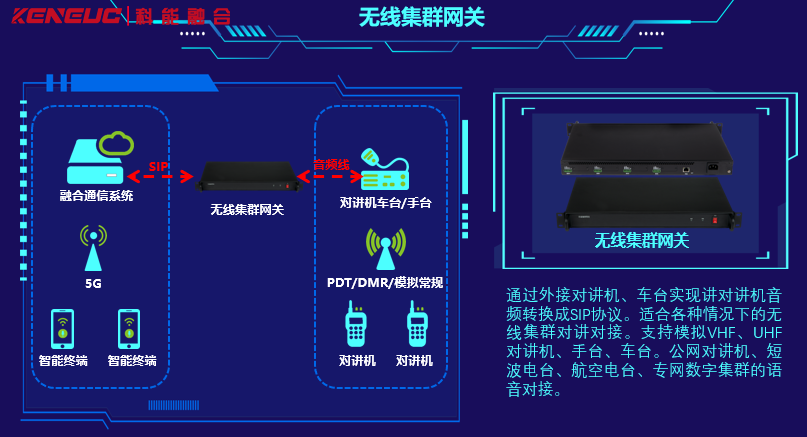
Compare channel count, radio interfaces and deployment layout when selecting a multi-channel RoIP gateway.
Review QoS, delay and jitter requirements that affect voice quality and PTT response across the IP network.

Plan controlled radio-to-SIP communication paths for dispatchers, telephone users and selected radio channels.

Centralize recordings, alarms and gateway status so operators can supervise distributed RoIP resources.

Prepare the radio models, channel count, interfaces and network conditions needed for an accurate project quotation.
Verify audio levels, PTT operation, signaling and network performance before final RoIP system acceptance.
Common project questions about radio interfaces, IP transport, SIP interoperability and gateway selection.
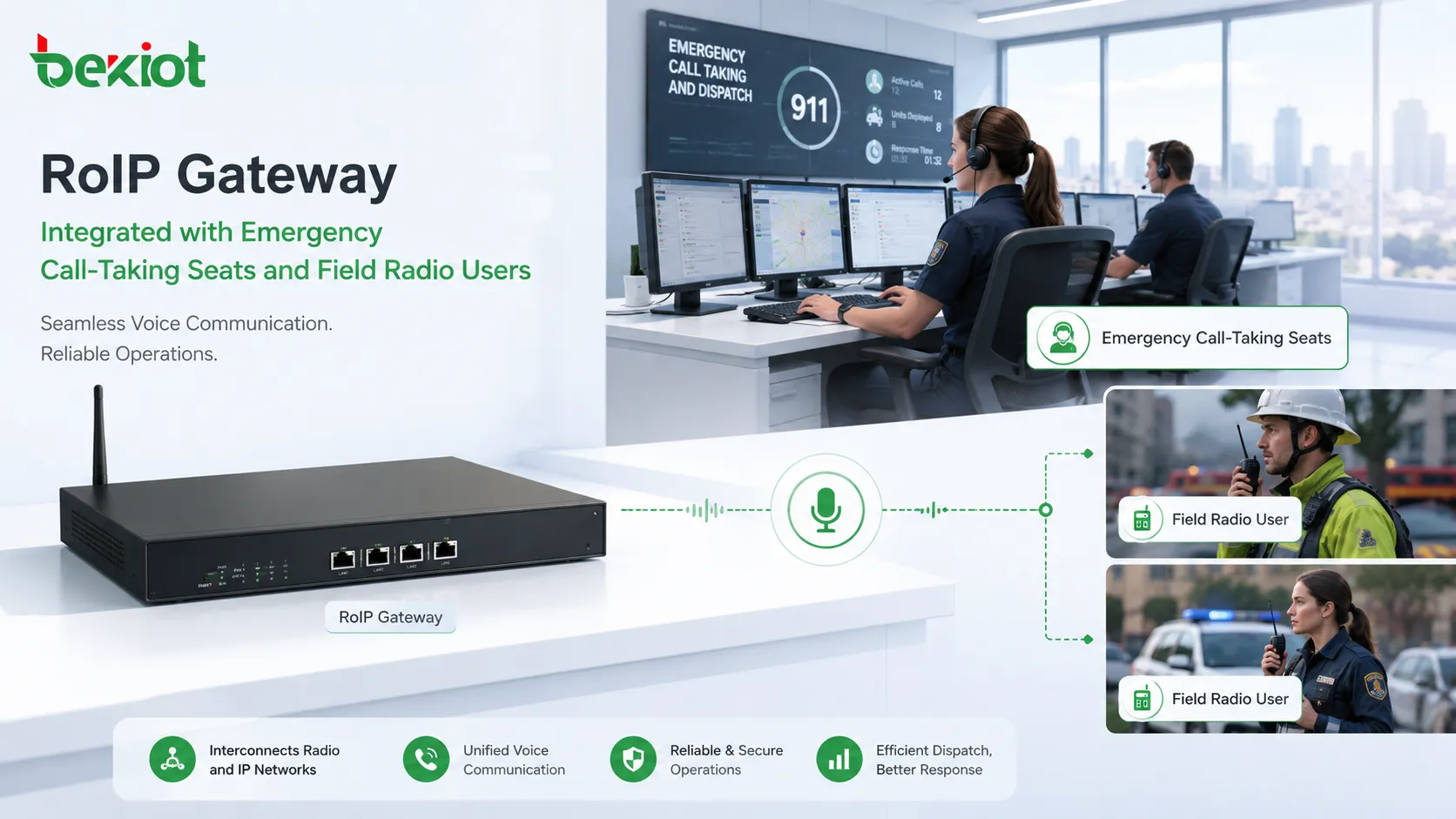
A RoIP gateway sits between a compatible control radio or radio interface and the IP network. It carries radio audio, PTT and supported signaling to authorized dispatch or communication resources over managed IP links.
Yes, where the radio interface is compatible. RoIP can extend existing radio resources over IP without replacing the complete field radio environment, but the radio model, audio interface and control signals should be confirmed before deployment.
Typical checks include transmit and receive audio, PTT and available signaling such as COR/COS. The exact interface depends on the radio and gateway, so pinout, signal levels and control logic should be verified during project design.
RoIP systems can create controlled communication paths between selected radio channels, SIP users and dispatch resources. The available call, patching and control functions depend on the gateway, platform and integration design.
RoIP depends on stable managed IP transport. Network design should consider availability, QoS, delay, jitter and the characteristics of the LAN, WAN, VPN, fiber or cellular links used between radio sites and dispatch positions.
Gateway selection depends on how many radio channels need to be connected, whether they are located at the same site, the required radio interfaces and how dispatch access is organized. A single-channel gateway may suit one radio resource, while a multi-channel gateway can consolidate several compatible radio channels at the same location.
Send the radio model, channel count, site layout, network conditions and dispatch requirements to receive gateway selection, system architecture and acceptance-test recommendations.
Talk to a solution engineer